




Written by: Medetone Medical Team Medically reviewed by: Dr Abdullah and the Medetone clinical team - GPhC-registered independent prescribers
Reading time: 8 minutes · Guidance verified: August 2026
Mounjaro is now one of the most searched-for medicines in Italy among people living with obesity, complicated overweight, or type 2 diabetes. A lot of what circulates about it, though, is imprecise particularly on how it works, what it costs, and how you legally obtain it.
This guide pulls together what actually matters before you speak to a doctor: what Mounjaro is, how it acts on the body, who it's indicated for, the doses, the side effects, the price in Italy, and when it's reimbursed. Mounjaro is a prescription-only medicine; this article is informational and doesn't replace your doctor's advice.
What is Mounjaro?
Mounjaro is the brand name for tirzepatide, an active ingredient made by Eli Lilly and given as a subcutaneous injection once a week.
The European Medicines Agency (EMA) authorised it in September 2022 for type 2 diabetes and, from November 2023, extended the indication to weight management. That's an important difference from the United States: in Europe, and therefore in Italy, the single Mounjaro brand covers both indications.
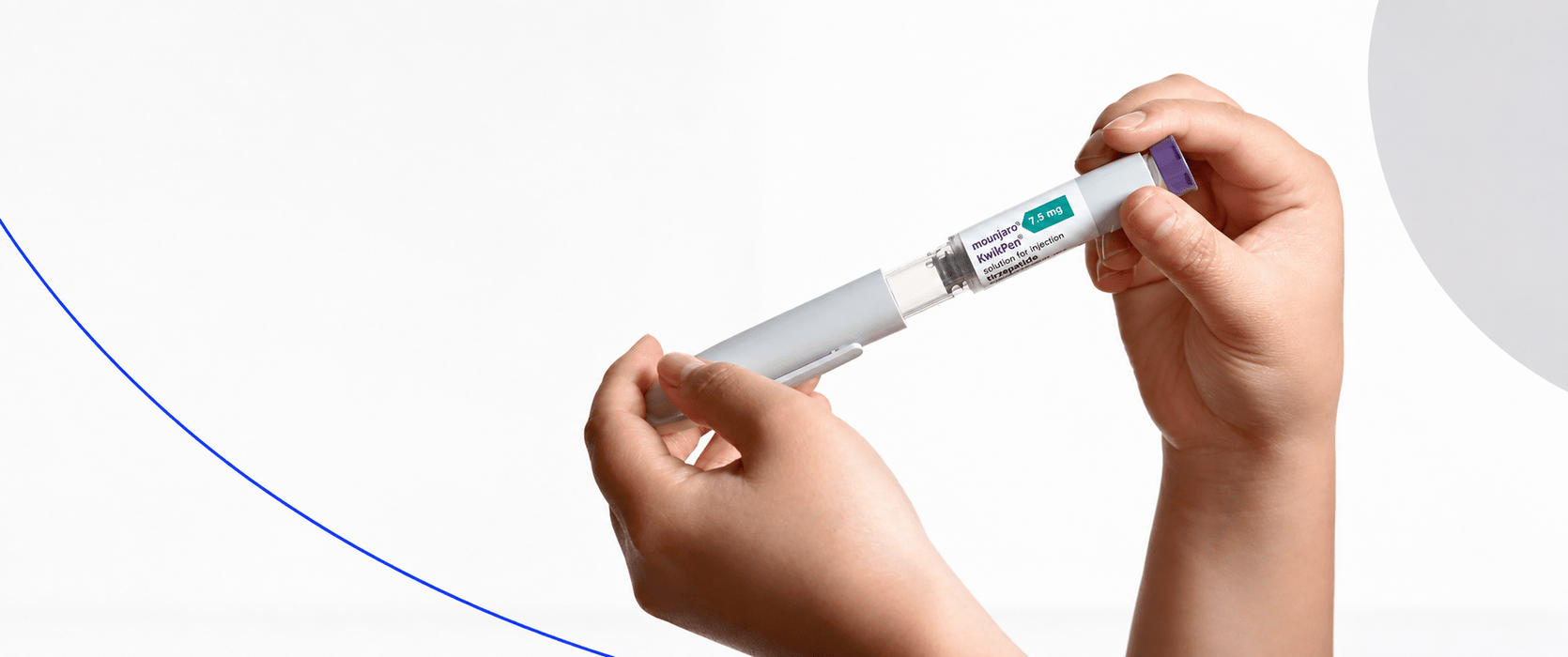
The medicine comes in six strengths, from 2.5 mg to 15 mg, in single-dose prefilled pens and in the multi-dose KwikPen.
How Mounjaro works
Mounjaro is the first and only dual GIP and GLP-1 receptor agonist it mimics two hormones your gut naturally produces after eating. Earlier molecules, such as semaglutide, act on one receptor only.

Four effects follow from that dual action:
-
insulin is released when blood sugar rises;
-
glucagon is reduced the hormone that pushes the liver to release stored sugar;
-
gastric emptying slows, so fullness lasts longer;
-
appetite drops, including the constant food noise many people describe.
The result is that you eat less without fighting hunger all day. One point from the product characteristics stays fixed, though: treatment must always be combined with a reduced-calorie diet and physical activity.
How much weight you lose, and how long it takes
In the registration trial covering more than 2,500 adults with obesity or overweight plus at least one weight-related condition, 72 weeks of treatment produced an average weight reduction of at least 15%, depending on dose, against roughly 3% on placebo. More than 85% of participants lost at least 5% of their starting weight, compared with 35% on placebo.
On timing the recurring question is how long Mounjaro takes to work. Broadly:
-
first 1-2 weeks: mainly a drop in appetite;
-
4-12 weeks: clinically meaningful weight loss begins, usually once you move past the starter doses;
-
6-18 months: you reach the plateau described in the trials.
Anyone expecting ten kilos in a month will be disappointed: weight loss here is gradual and proportional to consistency, not immediate.
Who Mounjaro is for in Italy
Under the European product information, Mounjaro is indicated in adults in two situations.
For weight management, alongside diet and exercise:
-
BMI ≥ 30 kg/m² (obesity), or
-
BMI between 27 and 29.9 kg/m² (overweight) with at least one weight-related comorbidity: hypertension, dyslipidaemia, obstructive sleep apnoea, cardiovascular disease, prediabetes or type 2 diabetes.
For type 2 diabetes, where blood sugar isn't adequately controlled by diet and exercise, either alone or combined with other antidiabetic medicines.
Outside these criteria it isn't an appropriate medicine: there is no cosmetic use of Mounjaro for people at a normal weight.
Contraindications: who should not use it
The main contraindications for Mounjaro are:
-
personal or family history of medullary thyroid carcinoma or MEN 2 syndrome;
-
hypersensitivity to tirzepatide or any excipient;
-
pregnancy and breastfeeding;
-
being under 18 for weight management.
Particular caution and a thorough medical assessment are also needed with previous pancreatitis, gallbladder disease, gastroparesis or other serious gastrointestinal disorders, diabetic retinopathy, and in patients already on insulin or sulfonylureas because of hypoglycaemia risk. Mounjaro must never be combined with another GLP-1 agonist such as Wegovy or Ozempic.
Mounjaro dosage: the titration schedule
Dosing doesn't start at the full dose you step up gradually, and this is the part most often misunderstood.

You start on Mounjaro 2.5 mg once weekly for four weeks a starter dose meant to let the body adjust, not to deliver the treatment result. You then move to Mounjaro 5 mg, and from there your doctor can increase by 2.5 mg at a time after at least four weeks on each dose, up to a maximum of 15 mg per week. The most commonly used maintenance doses are 5, 10 and 15 mg.
If gastrointestinal effects are strong, titration can be slowed. That's a clinical decision, not something to do on your own.
How and where to inject
Inject once a week, on the same day each week, at any hour and regardless of meals. The approved sites are the abdomen (at least 5 cm from the navel), the thigh, or the back of the upper arm, rotating the site each time. You can change your injection day as long as at least 72 hours separate two doses. If you miss a dose, you can take it within 4 days; beyond that, skip it and resume your usual schedule.
Pens are stored in the fridge between 2 and 8 °C, never frozen.
Mounjaro side effects
The most common Mounjaro side effects are gastrointestinal and cluster in the first weeks or straight after a dose increase: nausea, diarrhoea, vomiting, constipation, indigestion, abdominal pain and reduced appetite. In most cases they ease within 4 to 8 weeks.
Rare but requiring immediate medical attention: acute pancreatitis (severe, persistent abdominal pain that may radiate to the back), gallbladder problems, dehydration with possible effects on kidney function, serious allergic reactions, vision changes, and hypoglycaemia when the medicine is combined with insulin or sulfonylureas.
One point that gets less attention: rapid weight loss can also cost you lean muscle mass. Adequate protein intake and resistance training are the standard countermeasure.
Mounjaro price in Italy: cost and reimbursement
Here the Italian picture is clear-cut and worth understanding properly.
For type 2 diabetes, Mounjaro has been reimbursed by the National Health Service since 23 February 2025, under the criteria of AIFA Note 100, prescribed through the Tessera Sanitaria system.
For weight management, the medicine sits in Class C: the cost falls entirely on the patient, on a private prescription. The price varies by strength and pack size and lands, broadly, in the range of several hundred euros per month. Extending reimbursement to obesity has been under discussion for some time but has not been approved to date.
Two practical warnings. First, there is no legal route to buy Mounjaro without a prescription, including on general marketplaces. Second, EMA and AIFA have repeatedly flagged counterfeit GLP-1 pens in circulation, with the active ingredient missing, wrong, or badly stored. The apparent saving is a real clinical risk.
How long do you take Mounjaro?
Obesity and type 2 diabetes are chronic conditions, and treatment is designed as a long-term therapy with periodic review. On stopping, some of the weight tends to return, particularly if eating habits and activity levels haven't changed in the meantime. Your doctor reassesses at regular intervals and may decide to stop treatment if the response is insufficient or tolerance is poor.
Mounjaro or Wegovy?
In a head-to-head trial at 72 weeks, tirzepatide showed greater average weight loss than semaglutide (roughly 20% against 14%). The real choice, though, depends on individual tolerance, comorbidities, availability and cost judgements that belong to the prescribing doctor. There's a fuller comparison in our European guide to Mounjaro.
Your next step
If you meet the BMI criteria and you're considering a weight management pathway, the first step is a medical assessment: history, contraindications, current medicines and realistic goals. On Medetone you can read the dedicated page for Mounjaro for weight loss and start an assessment with a licensed doctor.
Frequently asked questions
Is Mounjaro reimbursed in Italy?
Only for type 2 diabetes, under AIFA Note 100. For weight loss it sits in Class C, so the patient pays in full.
Can you buy Mounjaro without a prescription?
No. It's a prescription-only medicine on a non-repeatable prescription any channel offering it without one is illegal and potentially dangerous.
How long does Mounjaro take to work?
Reduced appetite is often noticeable in the first weeks; significant weight loss usually arrives after 1-3 months, as the dose steps up.
Does Mounjaro cause muscle loss?
Rapid weight loss can include lean mass. Adequate protein and resistance training are the standard countermeasure.
Can you drink alcohol during treatment?
It isn't absolutely contraindicated, but alcohol can worsen gastrointestinal effects and affect blood sugar best limited, and worth discussing with your doctor.
References
- European Medicines Agency (EMA) — Mounjaro (tirzepatide): EPAR and product information. Authorised indications, mechanism of action, dosing and side effects. https://www.ema.europa.eu/en/medicines/human/EPAR/mounjaro
- Italian Medicines Agency (AIFA) — Reimbursement of the new active substance tirzepatide for type 2 diabetes, 24 February 2025, and Note 100. https://www.aifa.gov.it/-/farmaci-diabete-mellito-tipo-2-rimborsabilita-tirzepatide
- Jastreboff AM, Aronne LJ, Ahmad NN, et al. Tirzepatide Once Weekly for the Treatment of Obesity (SURMOUNT-1). N Engl J Med 2022;387(3):205–216. DOI: 10.1056/NEJMoa2206038. https://www.nejm.org/doi/full/10.1056/NEJMoa2206038



Share:
How long to take Mounjaro
Mounjaro reviews: what patients report