

Medically reviewed by: Dr Abdullah
Reading time: 8 minutes
How Long to Take Mounjaro: Treatment Duration, Maintenance and Stopping Explained
The short answer
If you are asking how long to take Mounjaro, the honest answer is that there is no fixed, pre-set course length. It is not an antibiotic you take for ten days and finish.
Tirzepatide the active ingredient in Mounjaro is licensed as a long-term treatment for a long-term condition. The clinical evidence, summarised below, points to a clear conclusion: the weight reduction achieved on tirzepatide is largely maintained while treatment continues, and is substantially reversed when treatment stops. In the SURMOUNT-4 trial, people who stopped after 36 weeks regained an average of 14% of body weight over the following year, while those who continued lost a further 5.5%.
That does not automatically mean "forever." It means the question is not "when does the course end?" but "what is my long-term plan for managing this condition, and what role does medication play in it?" a question with a different answer for different people.

In practice, most people fall into one of these patterns:

The rest of this guide explains the evidence behind each of those, what actually happens physiologically when you stop, and the questions worth raising with your prescriber.
Why obesity needs long-term treatment
Obesity behaves like hypertension: a chronic condition where the body defends its weight. After any weight loss, energy expenditure falls and hunger hormones rise, pushing weight back up. Tirzepatide reduces appetite drive but does not reset that set point.
The four phases of tirzepatide treatment
Treatment is usefully understood as four distinct phases. Knowing which phase you are in reframes questions like "why has my weight stopped moving?" which is often a sign of normal progression rather than failure.
Phase 1: Titration (approximately weeks 0-20)
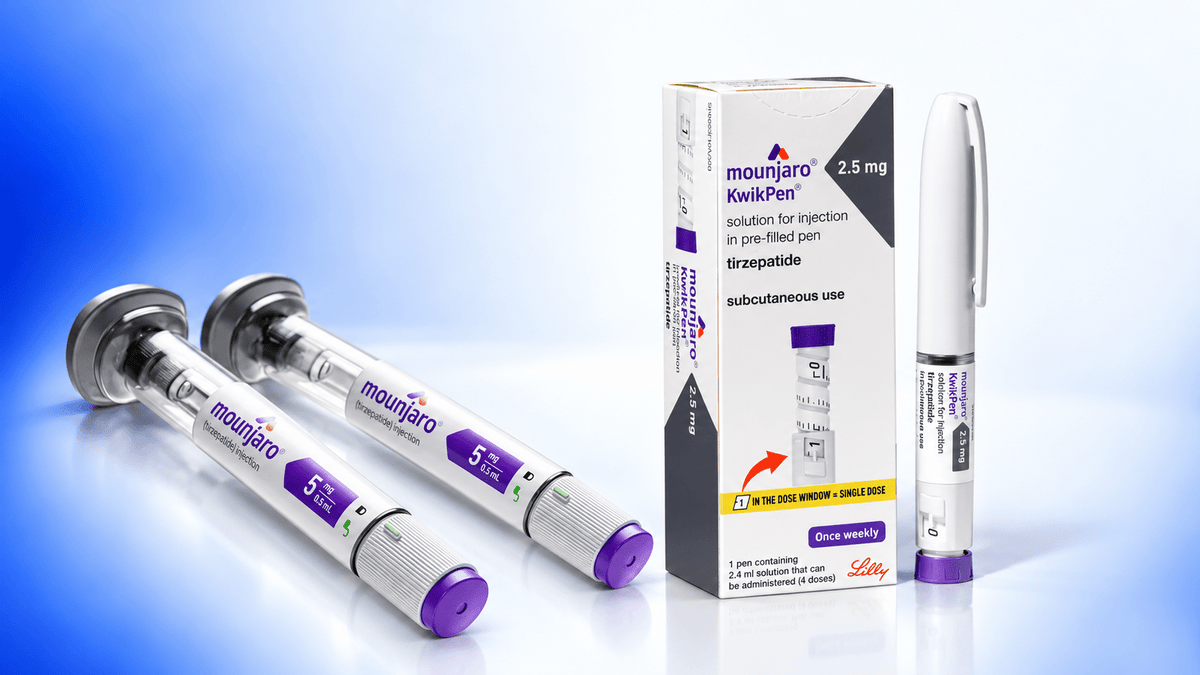
Weightloss treatment always begins at 2.5 mg once weekly. This starting dose is not intended as a therapeutic weight-loss dose it exists to let the gastrointestinal system adapt. Nausea, reflux and altered bowel habit are most pronounced in the first weeks of each dose increase, and starting at a full dose would make the medicine intolerable for most people.
After four weeks, the dose increases to 5 mg weekly. Beyond that, increases of 2.5 mg may be made at intervals of no less than four weeks, through 7.5 mg, 10 mg, 12.5 mg and up to a maximum of 15 mg weekly. The European licensed maintenance doses are 5 mg, 10 mg and 15 mg.
Reaching 15 mg from a standing start therefore takes a minimum of around 20 weeks and in real-world practice, frequently longer. Many prescribers hold at an intermediate dose for longer than four weeks where side effects are troublesome, or where weight loss is already progressing well. There is no clinical prize for escalating quickly. The optimal dose is the lowest one that produces a good response at acceptable tolerability, not the highest one the label permits.
Some people never need to reach the maximum. If someone is losing weight steadily at 7.5 mg with no side effects, escalating further may add adverse effects without proportionate benefit.
How long do you stay on each dose?
The minimum interval between increases is four weeks, but minimum and optimal are not the same thing. In practice, time at each dose varies considerably:

Three points are worth drawing out.
5 mg, 10 mg and 15 mg are licensed maintenance doses in Europe; 2.5 mg, 7.5 mg and 12.5 mg function primarily as titration steps. That said, prescribers do sometimes hold patients at intermediate doses long term where tolerability or response makes it sensible.
Staying longer at a dose is not falling behind. If you are losing weight steadily and comfortably at 7.5 mg, there is no clinical argument for pushing to 15 mg. Higher doses produce greater average weight loss across a population, but that says nothing about whether you need one. Escalation should be driven by inadequate response, not by the existence of a higher number on the label.
Going up too fast is the most common avoidable mistake. Rushing titration is the leading cause of intolerable nausea, which is in turn the leading cause of people abandoning treatment altogether in the first few months. A slower ascent that keeps you on treatment beats a fast one that ends it.
Someone titrating at the minimum permitted pace reaches 15 mg at around week 20. Someone holding for eight weeks at two intermediate doses reaches it closer to week 28. Both are entirely normal.
Phase 2: Active weight reduction (approximately months 5-18)
Once a therapeutic dose is reached, the steepest part of the weight loss curve typically follows. In SURMOUNT-1, the pivotal 72-week trial in adults with obesity or overweight without diabetes, mean weight reduction reached approximately 20.9% at the 15 mg dose.
The rate is not linear. Loss is generally fastest in the early months at therapeutic dose and decelerates progressively. People frequently misread this deceleration as the drug "stopping working," when it is the expected shape of the response curve. As body mass falls, so does total energy expenditure, and the gap between intake and expenditure narrows.
Phase 3: Plateau
Weight loss slows and eventually flattens. In the pivotal trials, the curve was still gradually descending at 72 weeks in many participants but had markedly flattened indicating that most, though not all, of the available reduction had occurred by then.
A plateau is a physiological equilibrium point, not a treatment failure. It is the point at which energy intake and expenditure have rebalanced at the new, lower body weight while on the medication. It is also the point at which the conversation about long-term strategy properly begins.
Options at plateau generally include:
-
Continue at the current dose to hold the result
-
Increase the dose, if not already at maximum and if further reduction is clinically indicated
-
Step down to a lower maintenance dose
-
Plan a structured discontinuation with intensive lifestyle support
-
Reassess whether the original target remains the right one
Is a plateau a reason to stop?
Usually not and this is a point where intuition misleads people badly.
A plateau on treatment means the medication is holding your weight at a level you could not previously sustain. It is doing work. Stopping at plateau because "it isn't doing anything any more" removes the force maintaining the new equilibrium, which is precisely when regain begins.
The distinction that matters is between plateau after meaningful loss expected, and a signal to move into maintenance planning and early non-response, where little weight was lost at a therapeutic dose in the first place. The second is a genuine reason to reconsider treatment. The first is not.
How long until I reach my goal weight?
This depends on how much you have to lose and how you respond, but the trial data supports rough expectations.
In SURMOUNT-1, mean reduction at the highest dose was around 20.9% at 72 weeks. Working from that, a person starting at 110 kg might reasonably anticipate:

These are population averages and should be treated as orientation, not prediction. Individual response varies widely some people substantially exceed these figures, others fall well short, and neither outcome is a moral event.
What the pattern does show clearly is that most of the available reduction occurs within the first twelve to eighteen months. For anyone whose goal requires close to the maximum achievable reduction, that is the realistic timescale to plan around not three months, and not six.
It also means that if your goal is achievable at a 10% reduction rather than a 20% one, you may reach it considerably sooner, which changes the maintenance conversation and can bring it forward substantially.
Phase 4: Maintenance
This is the phase that gets the least attention and matters the most. Maintenance is not a passive holding pattern it is an active clinical phase with its own goals, its own risks, and its own evidence base.
The critical evidence here comes from SURMOUNT-4, which is worth examining in detail.
Stopping treatment, and long-term safety
Tirzepatide's five-day half-life means appetite returns gradually, from around week three to week twelve, with weight change following over months. Before stopping, ask whether a lower maintenance dose would hold your weight. Never stop unilaterally if you also take diabetes medication, and tell anaesthetic teams in advance of any surgery.
Cost and continuity of treatment
Most European countries do not reimburse weight-management medication through public health systems, even where the same drug is covered for type 2 diabetes. Treatment is therefore usually self-funded, and cost becomes a practical factor in how long people continue particularly during maintenance, when the goal is holding a result rather than losing further weight.
This matters for planning. Interruptions caused by cost are common, and restarting after a gap generally means re-titrating from a lower dose rather than resuming where you left off. If affordability is likely to shape your treatment, it is worth raising at the outset rather than mid-course: a lower maintenance dose is often sufficient to hold weight, and knowing that early can change the plan. Any decision about continuing, reducing or pausing should be made with a prescriber who knows your history, and is worth discussing at periodic review.
Frequently asked questions
How long to take Mounjaro for weight loss?
There is no fixed course. Most people reach their maximum benefit somewhere between twelve and eighteen months, after which the decision becomes whether to continue at the same dose, step down to a maintenance dose, or stop with a structured plan. Evidence from SURMOUNT-4 shows weight reduction is largely maintained while treatment continues and substantially reversed when it stops, which is why duration is reviewed periodically rather than fixed at the outset.
How long does it take to see results on Mounjaro?
Some appetite change is often noticed within the first weeks, though the starting 2.5 mg dose is a titration step rather than a therapeutic weight-loss dose. Meaningful weight reduction generally becomes apparent from the second or third month, as therapeutic doses are reached.
Can I take Mounjaro for just three months?
You can, but expect the result to be limited. Three months covers little more than titration, and evidence indicates substantial regain after stopping. Short, unplanned courses tend to deliver poor value and can contribute to unfavourable body composition changes over repeated cycles.
Will I regain all the weight if I stop?
Not necessarily all. In SURMOUNT-4, participants who stopped retained a mean 9.9% reduction from baseline a year later, having peaked at around 20.9%. But 82% of those who had lost 10% or more regained over a quarter of their loss within that year, and weight was still rising when the trial ended.
Can I take a lower dose long term instead of stopping?
Frequently yes, and it is worth discussing. Maintenance often requires less than active weight loss did, and the lowest dose that holds your weight may be considerably below your peak dose.
Is it safe to take Mounjaro for years?
Current evidence over the studied period is reassuring, with no unexpected safety signals in trials to 88 weeks. But data beyond that remain limited, which is why periodic review with a prescriber matters rather than indefinite repeat supply without assessment.